Shake, Stir or Build? Choose the Right Cocktail Method
Learn when to shake, stir or build a cocktail, with practical checkpoints for texture, temperature, dilution and consistent service.
Begin with the finished drink
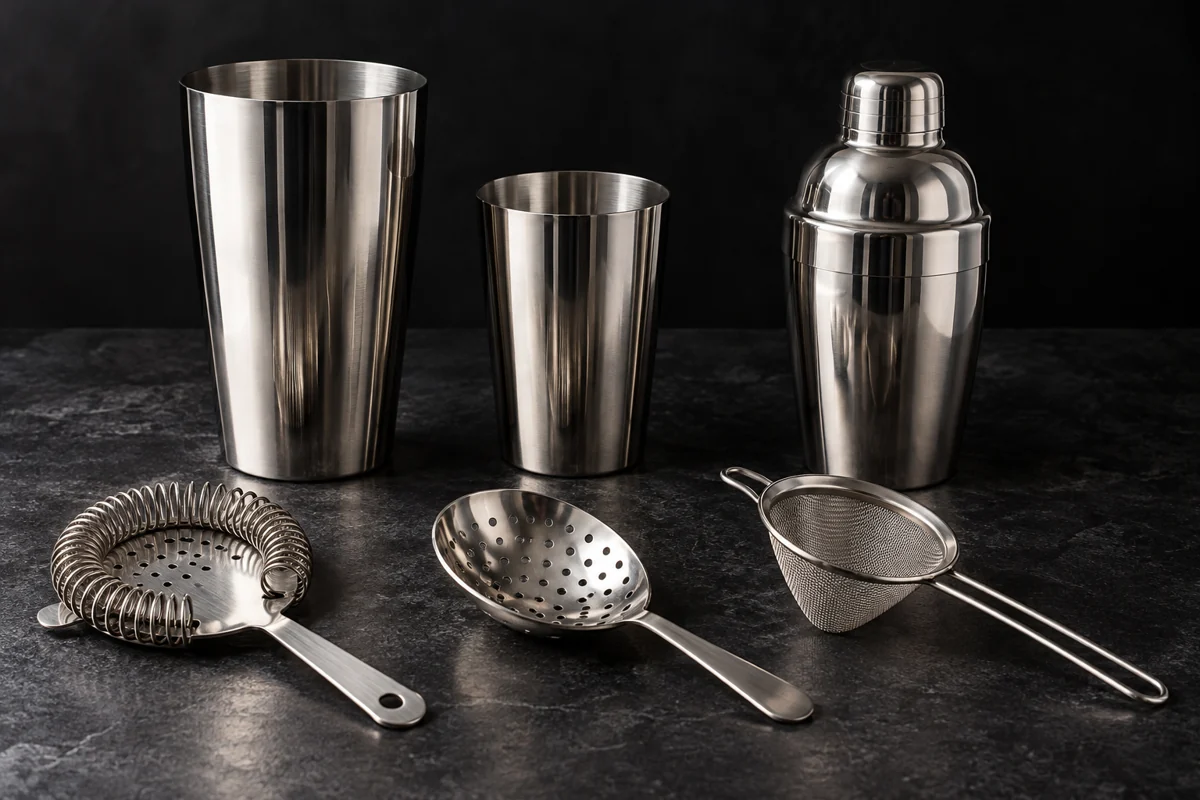
The method is part of a cocktail's design. Before reaching for a shaker, decide whether the finished drink should be lively and aerated, smooth and clear, or long and sparkling. That decision is more useful than treating every bottle containing fruit as an automatic invitation to shake. Follow an established recipe first, then change the technique deliberately if you want to investigate its effect.
Three familiar drinks make a useful starting map. The IBA Daiquiri is shaken; its Dry Martini is stirred and strained; its Negroni is assembled and stirred in the serving glass. These are concrete examples, not a rule that every drink in their ingredient families must follow. The liquid, ice, vessel and service all belong to the same specification.
What shaking asks you to control
For a shaken drink, measure the ingredients before adding ice, secure the shaker according to its design and give the liquid room to move. Use a comfortable, controlled motion with both pieces supported. The objective is a fully combined, cold drink with the intended texture, rather than the loudest possible performance. A leaking seal is a reason to stop and correct the setup.
Treat the amount and condition of ice as recipe variables. A tin packed so tightly that nothing moves behaves differently from one with useful working space. Equally, increasing the liquid to make extra servings changes the load. Establish a dependable single-serving method before deciding whether your equipment can comfortably handle two.
How to approach a stirred cocktail
Measure the ingredients into a suitable mixing vessel, add ice and move the spoon around the inside rather than repeatedly lifting and dropping the contents. Start slowly enough that the ice travels as a group. You can practise that motion with water before committing ingredients. A steady rhythm is easier to reproduce than an improvised burst of speed.
Strain into the specified glass when the result reaches the intended balance. A timer can help document a repeatable process, but it cannot diagnose every change in ice, starting temperature or portion size. If a Martini tastes harsh at the first sip, investigate its complete preparation rather than assuming the cure must be extra vermouth or more gin.
Built drinks still need a method
Building means assembling the drink in its serving vessel. It is efficient, but it does not mean pouring an arbitrary collection of ingredients over whatever ice fits. Choose the glass, measure the non-carbonated components and follow the recipe's order. The Negroni example includes stirring even though no separate mixing glass is involved.
For a sparkling long drink, keep the mixer chilled and add it in a measured amount near service. Combine gently enough to distribute the base without treating carbonation as something to beat out of the drink. If the glass is too small, choose a different vessel or a deliberately scaled recipe. Omitting half the mixer to make space changes the drink.
A small comparison exercise
Choose one existing stirred recipe and prepare two small, proportionally identical samples. Stir one according to the recipe; shake the other as an intentional comparison. Do not present the shaken version as the authentic specification. Observe clarity, visible bubbles, temperature impression and how the first sip differs from the last. Record the ice and the time as well as your preference.
Then repeat the original on another occasion with the same equipment. The exercise is useful only if it teaches you something you can reproduce. A single preference does not prove that one method is universally superior. When several people are tasting, collect individual observations before discussing them so the first opinion does not become everyone's description.
Troubleshoot the process before the formula
An uneven drink can come from incomplete mixing, inconsistent measures or an ingredient that was not prepared as specified. Start by checking those details. If all the liquid tastes sharply alcoholic, consider whether the intended chilling and dilution happened. If only the final portion seems unusually sweet, check whether a dense sweetener remained at the bottom of the vessel.
Work on one variable per trial. Replacing the syrup, doubling the shake time and changing the glass simultaneously may create a pleasant drink, but it leaves you unable to explain why. A home bartender can keep a three-line note. A venue should keep a versioned specification that a colleague can follow without asking the original developer.
A method card for the bar
Before service, write down the actions that affect the result, including the final pour and garnish. Avoid instructions such as make normally when different people have different normal routines. A short, observable standard is more useful than a theatrical description.
A clear method gives creativity somewhere dependable to begin. Once the basic drink is consistent, a change in technique becomes a conscious design choice rather than an invisible source of variation.
- Identify the method and the correct vessel before measuring.
- Record the single-serving amounts, ice format and intended glass.
- Note whether the drink is strained, fine strained or served with its mixing ice.
- State when carbonation is added and how the drink is combined.
- Keep cleaning, ingredient handling and allergy procedures separate from speed targets.
Editorial method and review
Prepared with AI assistance by CocktailsPro Editorial using the primary references below. The examples and checklists are original editorial proposals, not reported hands-on tests. This draft needs human editorial review and, where applicable, practical tasting before publication. Research checked on 12 October 2026.