Cocktail Syrups and Cordials: A Careful Prep System
Create repeatable syrup and cordial specifications with clear ratios, batch records and handling decisions instead of unsupported shelf-life promises.
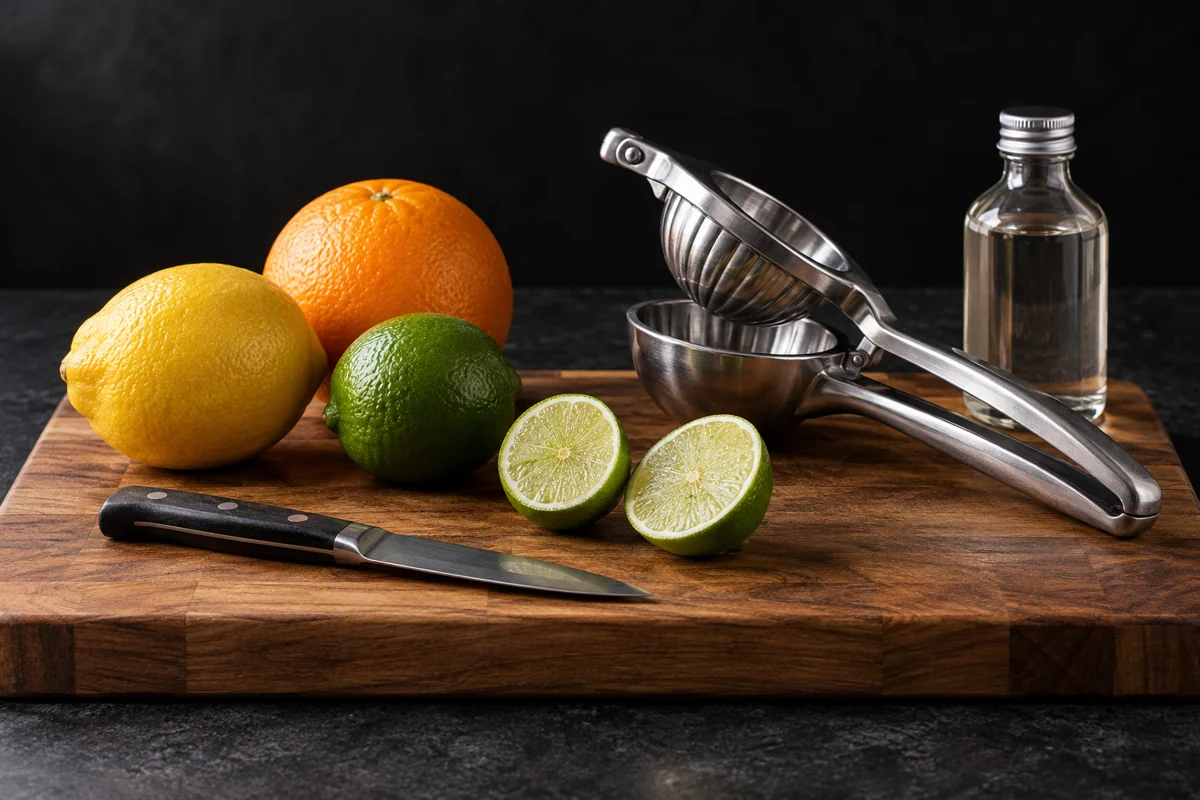
Make the preparation as clear as the cocktail
A prepared ingredient deserves its own recipe. If a cocktail calls for a house syrup, the syrup's formula and method should be available to anyone making the drink. Otherwise, an apparently precise 15 ml measure can conceal a different concentration every week. Treat the preparation as a small production task with a defined purpose, a known yield and an identified person responsible for it.
For home bartenders, that can be a short notebook entry. A venue needs a controlled specification that fits its food-safety procedures. This guide offers a planning method, not a validated preservation process. It does not assign a shelf life to homemade syrups or cordials, and sweetness or added alcohol should not be treated as a guarantee of safe storage.
Write ratios with units and a basis
A ratio of one part sugar to one part water is incomplete unless you say whether the parts are measured by mass or volume. NIST's culinary guidance distinguishes those measures. For a repeatable development formula, choose one basis and use it consistently. A scale can be convenient for mass-based preparations, provided its capacity and resolution suit the batch.
For example, a planning sheet might specify 100 g sugar and 100 g water. That describes the inputs, not a guaranteed 200 ml finished volume. Record the actual usable yield after the chosen preparation. If you later substitute honey, fruit puree or another sweetener, create a new specification rather than assuming the original ratio still means the same thing.
Define what the cordial is meant to do
The word cordial can describe different products in different settings. On your recipe sheet, explain its role in plain language: a concentrated fruit-and-sugar ingredient, a citrus preparation or a purchased product with a defined dilution instruction. The person making the drink needs to know whether it supplies sweetness alone or also contributes acidity and flavor.
Avoid designing a cocktail around a mysterious bottle name. Record the product and the preparation needed before use. If a commercial cordial is diluted for service, specify the amount of water separately. If you develop an original cordial, document every ingredient and obtain appropriate food-safety advice for the intended storage and service, especially before commercial production.
Keep a batch record that answers real questions
A useful label connects the container to its formula. Give each batch a name, a version, a preparation date and an identity that distinguishes it from similar-looking liquids. The record should also contain the ingredient quantities, supplier or product details when relevant, usable yield and the storage instructions applicable to that preparation.
Do not turn the date label into an invented expiry calculation. A use-by or discard policy should come from the product instructions or an appropriate validated food-safety procedure. If the process changes, revisit the policy. More sugar, a different fruit or a splash of spirits can alter the formulation; none automatically authorizes extending storage.
Separate quality experiments from safety decisions
You can evaluate whether a fresh, properly handled preparation tastes too concentrated, looks cloudy or performs poorly in a drink. You cannot establish microbial safety by tasting it. If a batch has an uncertain history, do not use sensory testing as a way to approve it. Follow the applicable discard procedure and correct the recordkeeping gap.
Commercial venues should work within their local requirements and consult a qualified food-safety professional for unfamiliar processes. The FDA Food Code is a useful U.S. model reference, but local adoption and requirements differ. This article is not a canning, fermentation or shelf-stable bottling guide. Keep those specialist processes outside an improvised cocktail prep routine.
Plan fruit and allergen handling
If fruit or herbs are involved, use the relevant produce-handling guidance and the venue's preparation procedures. FDA advises washing produce under running water before cutting, including fruit whose peel will not be eaten. Keep the preparation area organised so clean ingredients and finished containers do not cross used equipment.
Read the full ingredient information for syrups, concentrates and flavorings. Nut-based preparations, dairy ingredients and other allergens need an accurate record and a reliable service procedure. Do not assume that a clear liquid contains no allergenic ingredient. A short, recognisable batch name should be backed by the complete ingredient list rather than replacing it.
Choose a batch size from demand
A large batch is not automatically efficient. Start with expected servings multiplied by the amount used in each drink, then compare that requirement with safe storage capacity and the preparation's approved handling period. The minimum convenient recipe size may be larger than your actual demand; in that case, consider reducing the preparation or using a suitable purchased ingredient.
Measure waste rather than describing every leftover as unavoidable. If one flavored syrup appears in only a rarely ordered drink, it may deserve a smaller production schedule. Another preparation might support an alcoholic drink, an alcohol-free drink and a dessert application, provided those uses genuinely suit the flavor and the kitchen agrees to the workflow.
The final handoff
Before the container reaches the bar, make sure someone other than its maker can understand it. The handoff should make service easier without requiring guesswork.
A good prep system does not need elaborate terminology. It needs clear inputs, controlled handling and a reliable link between the bottle and the drink. That foundation makes seasonal experimentation more useful because you can repeat a successful idea without rebuilding it from memory.
- Confirm the preparation name, formula version and batch identity.
- Record actual usable yield and the intended portion per drink.
- Provide complete ingredients and relevant allergen information.
- Attach the applicable storage and discard instructions.
- Note whether the bottle needs any specific mixing step before measuring.
Editorial method and review
Prepared with AI assistance by CocktailsPro Editorial using the primary references below. The examples and checklists are original editorial proposals, not reported hands-on tests. This draft needs human editorial review and, where applicable, practical tasting before publication. Research checked on 12 October 2026.