Boston vs Cobbler Shakers: A Practical Choice Guide
Compare shaker designs by fit, working capacity, comfort and cleaning, then use a simple trial to decide what suits your cocktail routine.
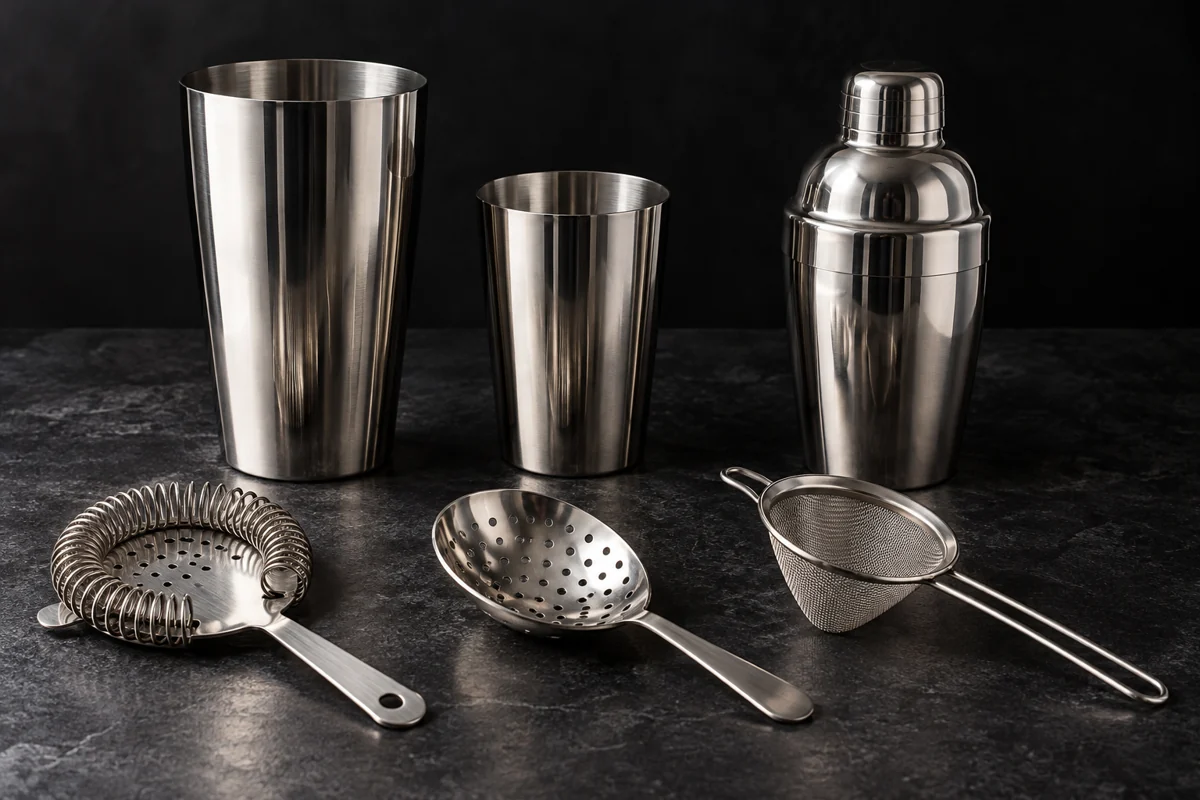
Choose for the drinks you actually make
The best shaker for your bar is the one you can seal, hold, open and clean reliably while making your usual recipes. A professional-looking shape does not make every drink better, and a compact design is not automatically a beginner's compromise. Start by listing your common serving sizes and whether you normally make one drink or several different orders at once.
This guide compares design features rather than reporting a product test. The official manufacturer references confirm examples of paired tins, three-piece cobblers and compatible strainers. They do not establish that a particular model is fastest, leak-proof in every situation or more durable than its competitors. Those questions require a relevant hands-on comparison.
Two-piece tins: a flexible system with a separate strainer
A tin-on-tin Boston-style setup uses two compatible vessels that fit together. One important word is compatible. A small tin sold individually may be intended to pair with a particular larger tin; the product specification should say so. Do not assume that any two metal cups will seal safely because their diameters look close in a photograph.
The system also needs an appropriate strainer for controlled pouring. That makes it a small set of tools rather than a self-contained object. In return, you can select the strainer independently and use the open tins for measuring and preparation. Before buying, consider where the separate parts will sit while clean, while in use and while awaiting washing.
If you choose a glass-and-tin version, use equipment intended for that purpose and follow its handling instructions. An ordinary drinking glass is not automatically a suitable shaking vessel. For someone who wants to avoid handling glass during the shake, matched metal tins offer an alternative without requiring claims about the superiority of one style.
Three-piece cobblers: integrated parts, individual differences
A cobbler has a body, a straining section and a cap. The integrated design can be appealing when you want a compact setup with fewer separate tools to choose. However, the cap should not be treated as a measuring cup unless its volume is explicitly specified or verified. You still need dependable ingredient measures.
Cobblers vary considerably in size and construction. The cited manufacturer's range includes an 800 ml example, so the category itself does not imply a tiny capacity. Conversely, a stated overall volume is not necessarily the useful amount of cocktail you can shake. Ice and movement need space, and the manufacturer's working guidance matters more than filling the vessel to its brim.
Before deciding, consider how the parts come apart when cold and wet, how easily you can access them for cleaning and whether a replacement component is available if one is lost. An elegant cap that repeatedly disappears into a crowded sink becomes a practical problem regardless of how attractive the assembled shaker looks.
A comparison trial that does not waste ingredients
If you can handle candidate tools in person, first examine grip and balance while they are empty. Follow the maker's instructions to assemble and separate them. Then, where permitted, practise with water and ice. Keep your surroundings clear and both pieces supported. Stop if the seal is uncertain; repeating a leaking shake more forcefully is not a useful test.
Run the same sequence for each design: measure a practice volume, add the planned ice, seal, shake, open, strain and clean. Note the point at which you hesitate. A tool that feels comfortable in one person's hands may be awkward in another's. For a venue, ask several people who will actually use the equipment to participate.
Do not score only the shaking motion. Record spills, opening difficulty, strainer fit, cleanup steps and the space occupied on the station. A small improvement in one action can be cancelled by an awkward step immediately afterward. A home user may reasonably prefer a calmer, simpler workflow even if another option appears faster in a demonstration.
Five details worth checking in the specification
Look at the precise listing and care instructions rather than relying on a category description. Product finishes, construction and compatibility may differ between items that share the same brand name. Use your findings to eliminate unsuitable options before comparing aesthetics.
A purchase checklist should reflect your menu. If you mostly stir Martinis, a second shaker may be less useful than improving your mixing and measuring tools. If your regular drinks are shaken sours, dependable access to clean shaker sets may matter more than owning several decorative styles.
- Included components: confirm whether the listing is a complete pair or a single tin.
- Working capacity: distinguish total vessel volume from the intended recipe load.
- Strainer compatibility: identify the separate tool needed for the chosen vessel.
- Cleaning: check the instructions for the material and any decorative finish.
- Handling: consider comfortable grip, weight and a clear way to separate the parts.
Use the choice consistently
Once you choose a shaker, develop recipes with that setup before changing several other variables. Keep the ingredient volume and ice routine consistent, then evaluate the drink in its intended glass. A new tool may invite a slightly different movement or capacity; establish what works instead of copying a timing claim from unrelated equipment.
Clean and inspect the shaker as part of the normal routine, following the applicable venue procedures and manufacturer guidance. Do not shake hot liquids or carbonated drinks in a sealed cocktail shaker; add the specified sparkling component during the appropriate finishing step. The point of the tool is controlled preparation. Confidence comes from a reliable sequence, not from having the most complicated equipment on the shelf.
Editorial method and review
Prepared with AI assistance by CocktailsPro Editorial using the primary references below. The examples and checklists are original editorial proposals, not reported hands-on tests. This draft needs human editorial review and, where applicable, practical tasting before publication. Research checked on 12 October 2026.