Bartender Workflow: Build a Station That Supports Service
Review station layout, order sequencing, restocking and handoffs to reduce avoidable movement while protecting accurate, careful drink preparation.
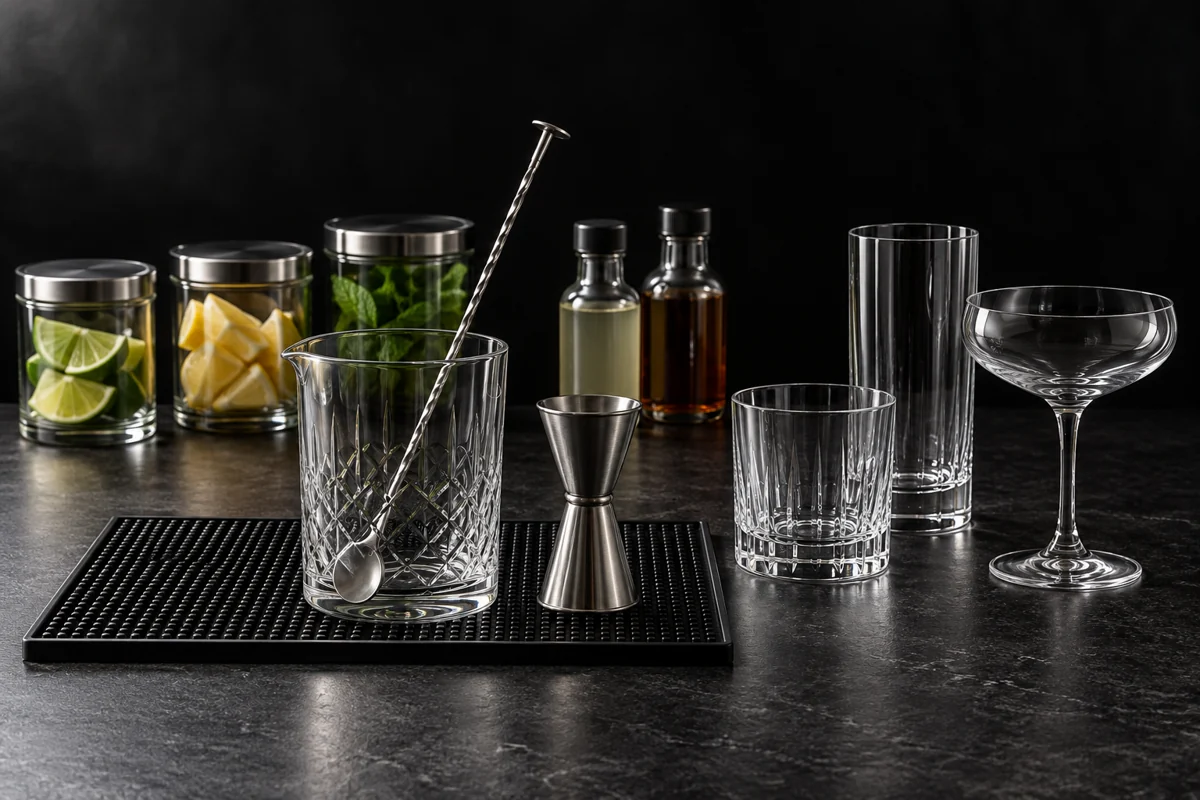
Observe a real order from beginning to end
A workflow problem often hides between the obvious steps. The bartender may measure and shake efficiently but lose time finding a clean glass, locating a garnish or waiting for a shared tool. Start with a complete order and follow it from receipt through preparation, handoff and reset. Record what actually happens rather than describing the ideal station from memory.
Choose a representative group of orders, including a mixed round. A station designed only around the easiest drink may fail when several methods are needed together. Ask the people doing the work where they hesitate or cross one another's path. Their observations can reveal issues that are invisible in a clean, empty bar before opening.
Give frequently used items a stable home
Place the tools and ingredients used most often where they can be reached comfortably within the available space. Keep the arrangement consistent enough that another trained person can step in without a long search. A shared standard does not require identical stations if the physical layout differs; it requires a clear explanation of what belongs where.
Group items by the actions they support. Measuring tools should be accessible when ingredients are assembled, while finishing items should be available without crossing used equipment. Keep clean glassware and the handoff area distinct from the return route for dirty glasses. Test the arrangement with the full body movement, not only the reach of an arm.
Avoid solving every shortage by adding another object to the worktop. A crowded station can hide labels and reduce safe working space. Remove items with no role in the current menu and identify which occasional tools can live nearby rather than in the central preparation area.
Write an order sequence that protects the drink
For a mixed round, consider which preparations can be assembled first and which should finish close to handoff. A sparkling component or a delicate presentation may need a different moment from an ingredient that can wait briefly within its required handling conditions. The objective is a coherent round arriving as intended, not merely the first completed glass leaving as quickly as possible.
Do not create shortcuts that leave perishable ingredients outside their handling rules or allow drinks to sit indefinitely. Keep the recipe's method and portion measures intact. If the menu repeatedly creates an impossible sequence, revise the menu or staffing plan rather than expecting technique alone to overcome the conflict.
A useful training exercise is a dry run with labelled practice containers and water. It reveals reaching, tool competition and handoff confusion without consuming cocktail ingredients. Once the movement is clear, run a controlled practical trial with the real recipes to check the result.
Make restocking a defined task
A station can begin perfectly arranged and deteriorate during service if no one owns replenishment. Identify the minimum working quantities for clean tools, glassware and prepared components, then set a clear signal for replacement. Keep reserve supplies in their required storage and ensure labels remain visible.
Assign the handoff between the person making drinks and the person supporting the station. Restocking should not involve reaching unpredictably across an active pour or placing new bottles where dirty items are waiting. Discuss where the replacement is set down and how the outgoing container is removed. A few agreed actions can prevent repeated interruptions.
Use service data to refine the quantities. A large reserve on the worktop may create handling problems, while a tiny reserve may force constant trips away from the station. The right amount depends on the menu, demand, equipment and safe holding arrangements.
Keep allergy communication outside guesswork
The Food Standards Agency's guidance emphasizes accurate ingredient information, staff training and managing allergen cross-contact. Build those requirements into the workflow before measuring speed. The person taking an order needs a reliable way to communicate a guest's requirement, and the person preparing it needs access to the current recipe and product information.
Name who can resolve an uncertain request. A new garnish, substituted syrup or changed commercial product can alter the answer. Do not rely on someone remembering the ingredients from an earlier version. If the venue cannot meet the requirement, the guest needs a clear explanation before a drink is made.
Keep the legal and procedural details aligned with the venue's jurisdiction. The cited FSA material is relevant to its stated UK scope; another location may have different requirements. The transferable principle is that a faster station still needs dependable information and a controlled preparation process.
Measure improvement without inventing certainty
Record observable outcomes: fewer searches for tools, fewer interrupted pours, clearer handoffs or a reduction in documented remakes. If you time orders, define the start and finish consistently and compare similar service conditions. A quiet training session and a crowded peak shift are not equivalent tests.
Do not promise that rearranging a station will increase revenue by a fixed percentage. A workflow trial can show that a particular step became easier under observed conditions. Broader business results depend on many factors. Keep the claim proportionate to the evidence and record any new inconvenience created by the change.
Invite the team to identify unintended effects. Moving a bottle closer to one person may put it in another person's path. A layout decision should work for the whole service rather than optimize a single impressive demonstration.
Close with a repeatable reset
A closing routine prepares the next service as much as it ends the current one. Follow the venue's cleaning, storage and discard procedures, then leave a concise handover covering shortages, equipment issues and recipe changes. Unresolved problems should have an owner rather than becoming the next shift's surprise.
Good workflow feels calm because the small decisions have already been made. That creates more attention for accurate drinks and thoughtful service without asking people to compensate for an unclear system.
- Check that the current recipe references match the menu.
- Confirm clean tools and glassware can be replenished predictably.
- Keep ingredient labels and allergy information current.
- Protect clear routes for finished drinks and used equipment.
- Record one layout change at a time and review its effect.
Editorial method and review
Prepared with AI assistance by CocktailsPro Editorial using the primary references below. The examples and checklists are original editorial proposals, not reported hands-on tests. This draft needs human editorial review and, where applicable, practical tasting before publication. Research checked on 12 October 2026.